
Our History - Christ Church GreyFriars
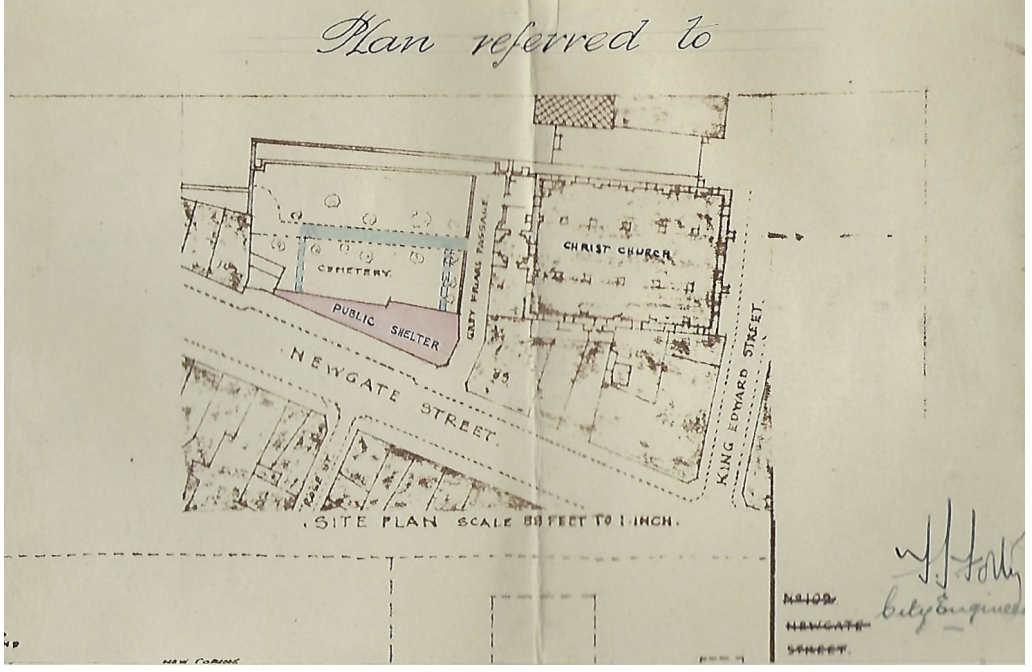
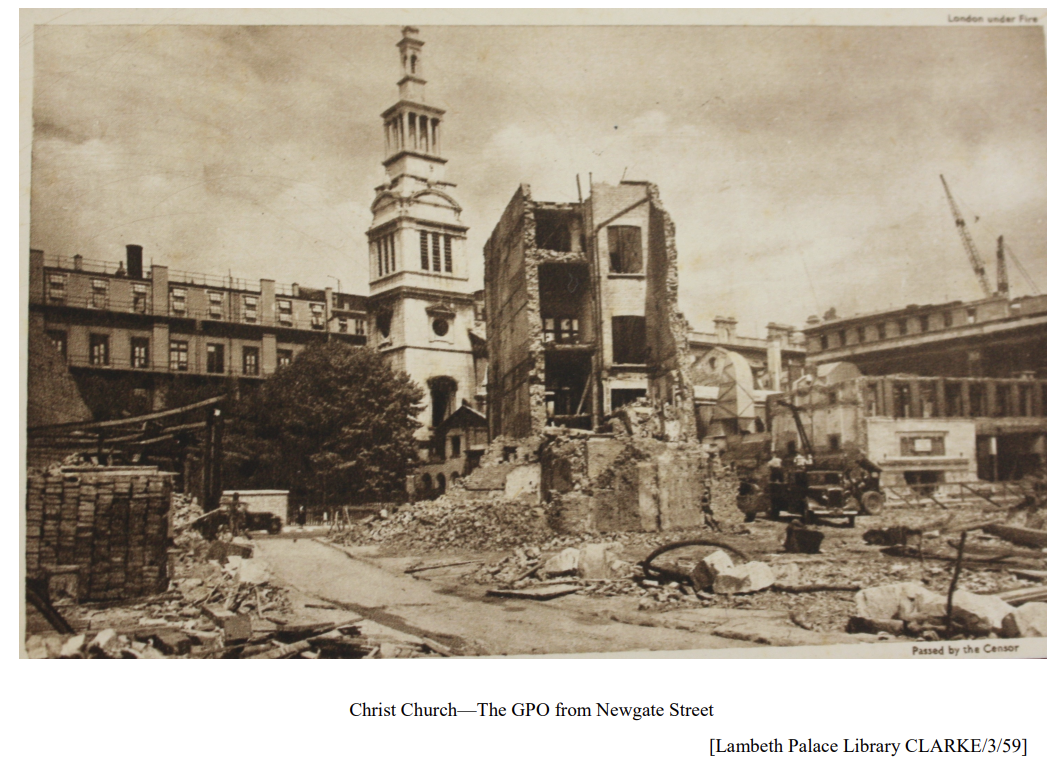
Christ Church, Greyfriars, also known as Christ Church, Newgate Street was built around the middle of the 13th century. It was destroyed in the Great Fire of London in 1666 and rebuilt. It was severely damaged on 29 December 1940 during the Blitz. The Diocesan authorities decided in 1949 not to rebuild it. The remains of the church were Grade I listed on 4 January 1950 and in 1954 its parish was merged with that of St Sepulchre’s.
Writing in 1839, Godwin and Britton wrote:
“In the year 1224, nine monks of the Franciscan order, better known as Grey Friars, from the colour of their garments, came to England from Italy. They landed at Dover; and five of them established themselves at Canterbury, where through the munificence of the inhabitants they were soon enabled to build a monastery. The rest of the party came to London, and with the assistance of the ‘Preaching Friars’ in Holborn, obtained a house in Cornhill, which they converted into a temporary residence, although unsuitable for their purpose. Their reputation and consequent influence over the citizens, however, increasing, numbers of persons joined them, and John Ewin, a mercer, purchased a vacant piece of ground in the parish of St Nicholas Shambles, which he appropriated to the Corporation of London for the use of these friars, and with the aid of other citizens, erected various buildings for their occupation. William Joyner, Lord Mayor in 1239, built the choir; and Henry Wallis, a succeeding Lord Mayor, built the body of a church for them. Within a comparatively short space of time, however, this church was taken down, and in 1306, a new edifice of large dimensions was commenced at the expense of Queen Margaret, second wife of Edward I, John of Brittany, Earl of Richmond; Gilbert de Clare, Earl of Gloucester; and other benefactors. Stow says that the church ws consecrated in 1325, although it does not seem to have been completely finished at that time: we have no description of the building, but judging from statements which he and other authors have left us, it must have been an important structure. It was 300 feet long, 89 feet broad, and 64 feet 2 inches from the ground to the roof. The windows, according to certain entries in the churchwardens’ books of later date, were probably filled with stained glass, and the ceiling of the chancel was painted at an expense of 50 marks. In connection with the church, too, Richard Whittington, Lord Mayor of London, founded a library in 1429, and furnished it with desks and settles for students. Among the items of expenditure on account of this library, we will mention one of a hundred marks for writing out the works of D Nicolas de Lira, in two volumes; serving to remind us of the disadvantages under which our forefathers laboured with regard to the means of obtaining knowledge, and the inestimable advantages which have resulted to society from the invention of printing”
Strype gives a numerous list of noble persons who were buried in the church. Among them were four Queens, namely: Margaret, wife of Edward I the foundress of the edifice (who died in 1317); Isabel, the unnatural wife of King Edward II; Joan of the Tower, wife of Edward Bruce, King of Scotland; and Isabel, wife of Sir William Fitzwarren, and at one time Queen of the Isle of Man (See section below on Burials).
After the dissolution of religious houses in the reign of Henry VIII the church establishment was used as a warehouse for prizes taken from the French, and in consequence remained shut up for some time. In 1546, however, the King by a deed dated Dec 27, gave the whole of the priory – the church, library, chapter-house, great cloister, little cloister &c. – with various rents and profits, to the Mayor and corporation of London. He also gave them the Hospital of St Bartholomew the Little, and the parish churches of St Ewin in Newgate Market and St Nicholas in the Shambles, and directed that these two parishes, a part of St Sepulchre’s parish, situated within Newgate, and all the site of the late dissolved priory, should form one parish, and that the church of the priory should be the parish church, and be called ‘Christ’s church within Newgate, founded by Henry VIII.
The object of the king in making this grant, as set forth in the indenture, was to ameliorate the condition of the poor; but it does not seem that much was done in this respect in consequence, until the sixth year of the reign of his successor, the young king Edward VI who, after hearing a sermon preached by Bishop Ridley, in which he strongly urged the necessity of relieving and comforting the poor, effected the organization of St Bartholomew’s Hospital, and St Thomas’ Hospital, for the relief of the sick, and the establishment of Christ’s hospital in the house that was late the Grey Friars before spoken of, for the reception and instruction of young children. Charles II was a great benefactor to the establishment, and its revenues have been augmented so enormously since that period by time and circumstances, that it is now perhaps the most important of its kind in England. Until within a comparatively recent period, the buildings used for its objects were entirely shut out from Newgate Street by houses, and were of a very indifferent character. In 1825, the first stone was laid of the present hall, which is a noble monument of the skill and taste of its architect, the late John Shaw Esq. and since then, various other buildings for the purposes of the school, especially on the eastern side of the hall, have been re-erected under the able direction of his son.
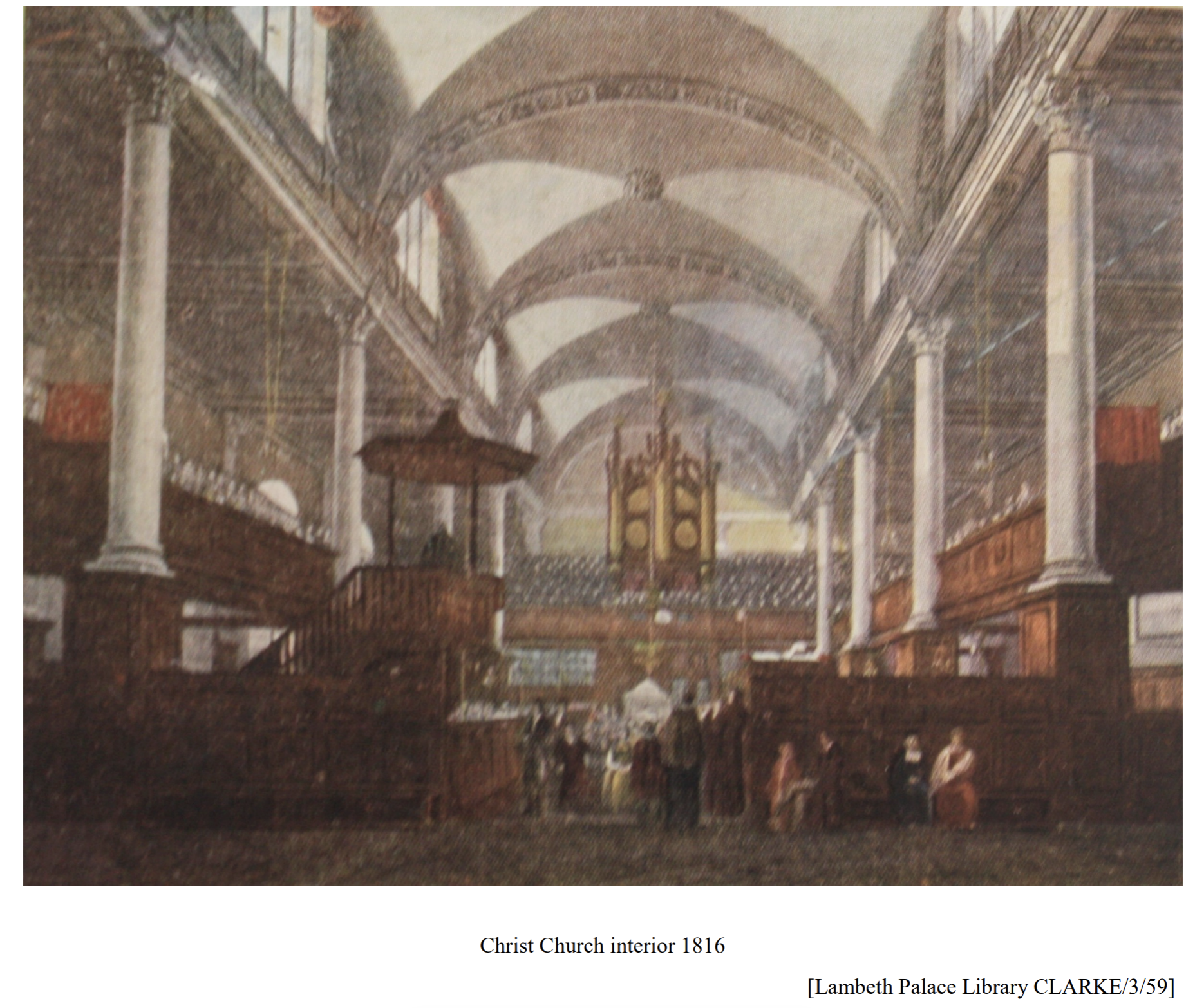
By the fire of 1666, the old church before spoken of, was destroyed, and, it would appear, remained untouched until the year 1687, when the present structure was commenced from the designs of Sir Christopher Wren. It was completed in 1704. By virtue of the deed executed by King Henry VIII the patronage of the vicarage of Christ Church was vested in the mayor and commonalty of London, as Governors of the Royal Hospital of St Bartholomew. After the fire, the parish of St Leonard, Foster Lane, was united to that of Christ Church; and as the right of presentation to the rectory of the former parish belonged to the Dean and Chapter of Westminster, that body now presents to the united vicarage and rectory alternately with the Governors of St Bartholomew’s Hospital. …”
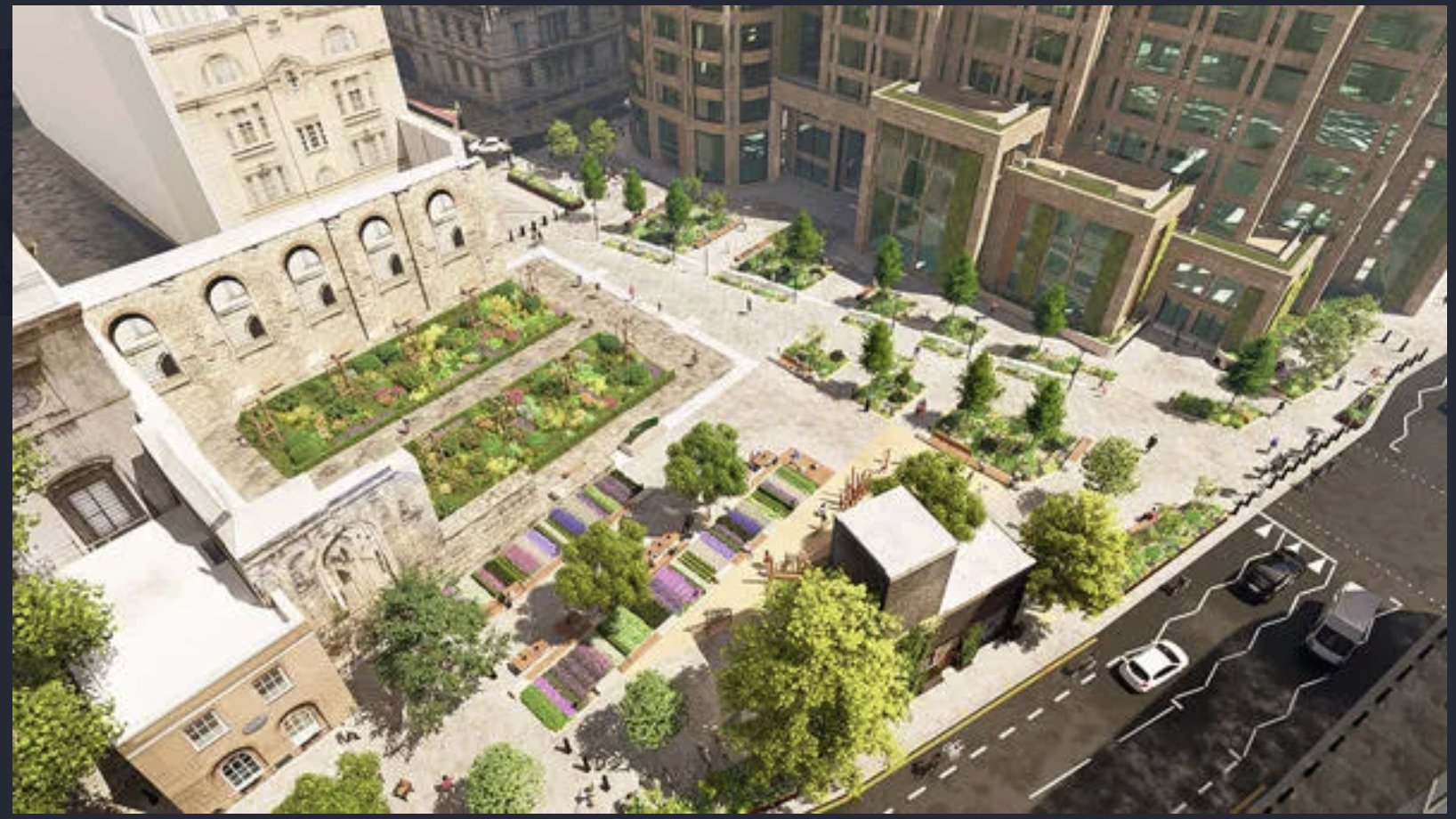
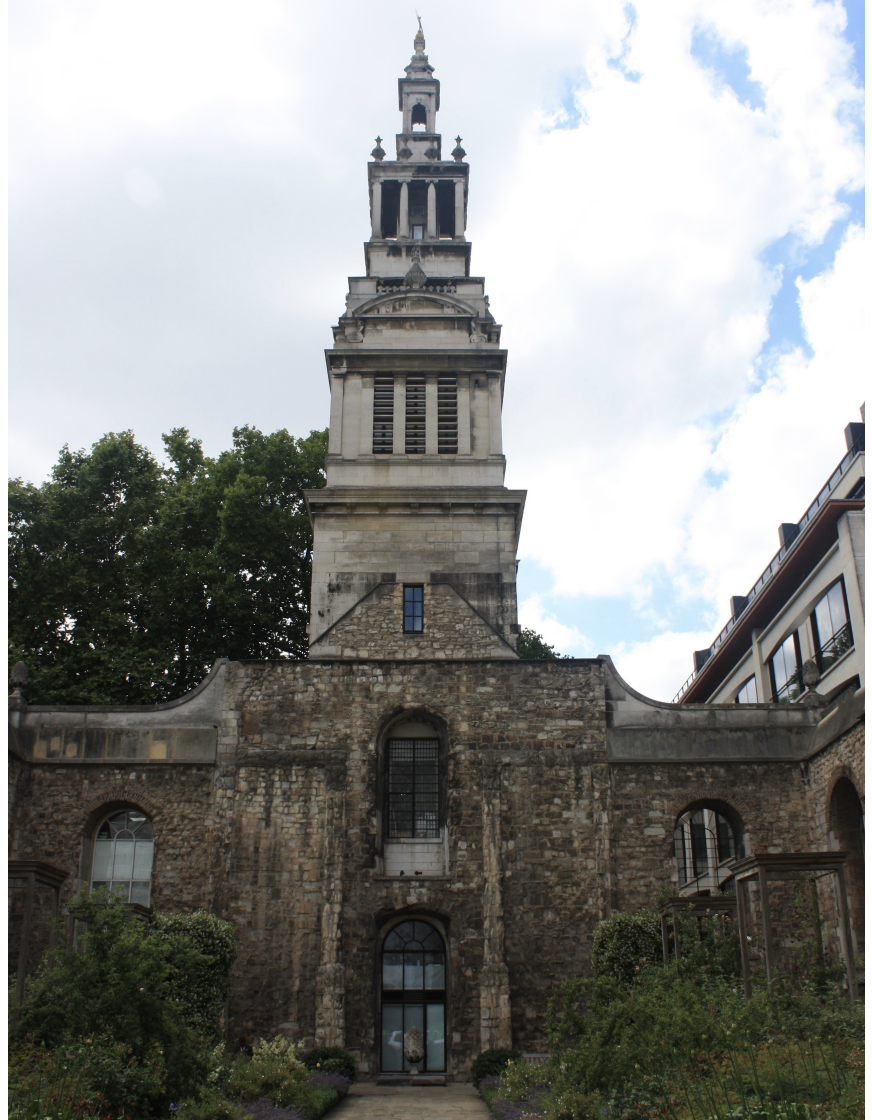
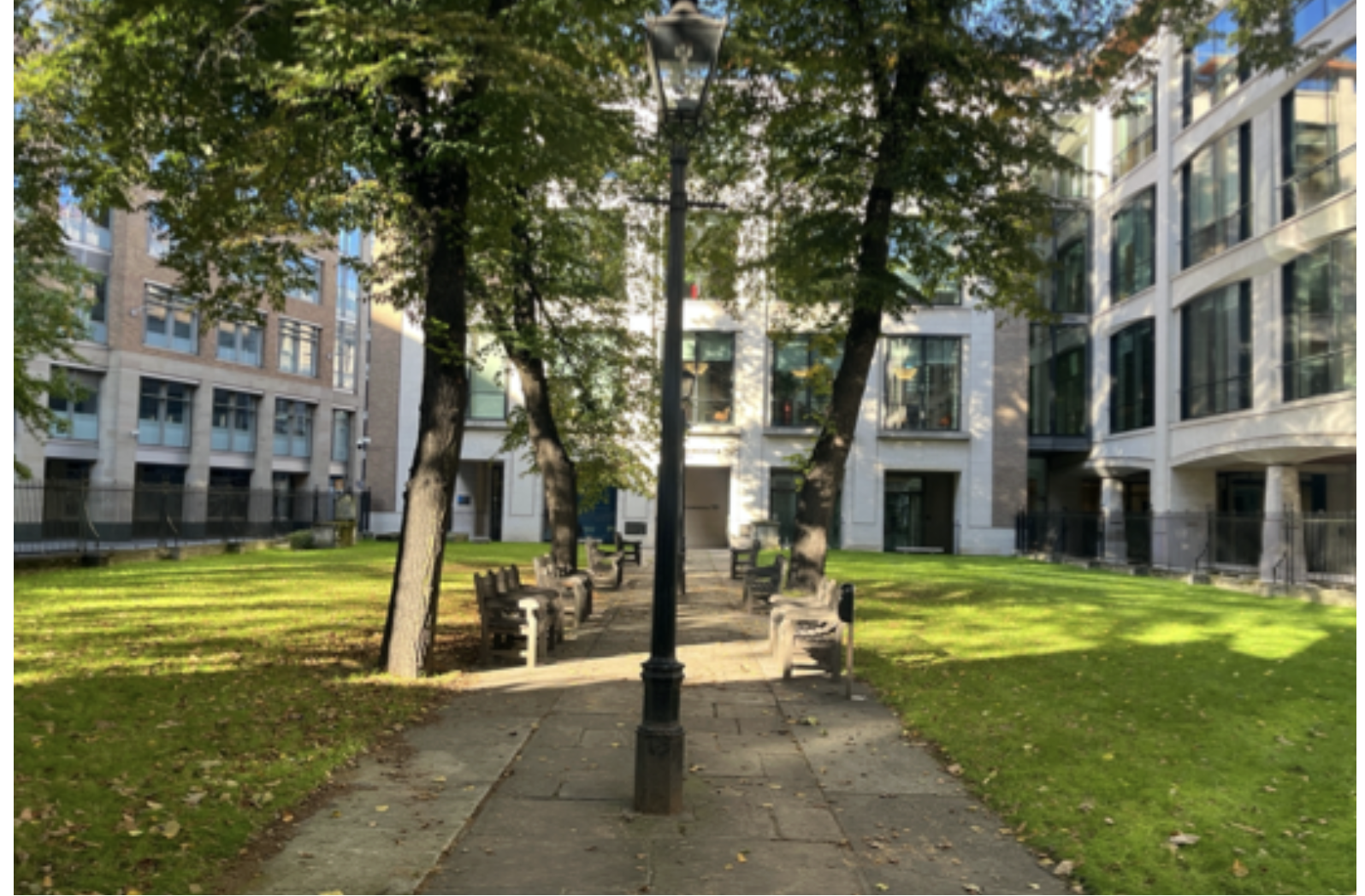
The steeple, still standing after the wartime damage, was disassembled in 1960 and put back together using modern construction methods. The surviving lower part of the south wall and the entire east wall were demolished in 1962 to make way for a widening of King Edward Street. In 1989 the former nave area became a public garden and memorial. Subsequently (c2002) King Edward Street was returned to its former course, and the site of the church regained its pre-war footprint. In 2006, work was completed to convert the tower and spire into a modern multi-level private residence.
Church Church burials
The church was a significant burial site for several members of the English and Scottish royalty and nobility. Further research is needed but initial evidence indicates that notable individuals interred there include:
Queens:
Margaret of France (c. 1279–1318): Second wife of King Edward I of England.
Isabella of France (c. 1295–1358): Wife of King Edward II of England.
Eleanor of Provence (c. 1223–1291): Wife of King Henry III of England; her heart was interred at Christ Church Greyfriars.
Joan of the Tower (1321–1362): Daughter of King Edward II and Queen Isabella; she became Queen of Scotland as the wife of King David II of Scotland.
Some, including Strype, also suggest that an “Isabel, wife of Sir William Fitzwarren, and at one time Queen of the Isle of Man” was buried at the church, although research suggest some historical confusion. More research needed.
Duchesses:
Margaret, Duchess of Norfolk (c. 1320–1399): Daughter of Thomas of Brotherton, 1st Earl of Norfolk, and granddaughter of King Edward I.
Eleanor Percy, Duchess of Buckingham (d. 1530): Daughter of Henry Percy, 4th Earl of Northumberland, and wife of Edward Stafford, 3rd Duke of Buckingham.
Countesses:
Isabella, Countess of Bedford (c. 1332–1379): Daughter of King Edward III of England.
Beatrice of England (1242–1275): Daughter of King Henry III of England and Eleanor of Provence; she became Countess of Richmond through her marriage to John II, Duke of Brittany.
Nobility:
John Segrave, 4th Baron Segrave (c. 1315–1353): A nobleman who married Margaret of Brotherton, later Duchess of Norfolk.
John Devereux, 1st Baron Devereux (c. 1337–1393): A prominent soldier and courtier during the reign of King Richard II.
Elizabeth Barton (c. 1506–1534): Known as the "Holy Maid of Kent," she was a Catholic nun and prophetess executed for opposing Henry VIII's marriage to Anne Boleyn.
Venetia Stanley (1600–1633): Celebrated beauty and socialite, wife of Sir Kenelm Digby.
Sir Kenelm Digby (1603–1665): Courtier, diplomat, and natural philosopher, known for his contributions to science and alchemy.
Richard Baxter (1615–1691): Influential Puritan church leader, theologian, and author.
Sir Thomas Malory (c. 1415–1471): Author of "Le Morte d'Arthur," a compilation of Arthurian legends.
Lawrence Sheriff (c. 1515–1567): Founder of Rugby School and grocer to Queen Elizabeth I.
John Clinton, 6th Baron Clinton: A nobleman who lived during the 15th century.
John Dynham, 1st Baron Dynham (c. 1433–1501): An English nobleman and administrator who served as Lord High Treasurer.
Elizabeth Bourchier (died 1557): Wife of Sir Edward Stanhope and mother of Anne Stanhope, Duchess of Somerset.
Richard Hastings, Baron Welles: A nobleman involved in the Wars of the Roses.
Robert de Lisle, 1st Baron Lisle: An English peer during the reign of Edward II.
Walter de Beauchamp: Steward to King Edward I.
Sir Ralph de Spigurnell: Admiral of the Fleets during the 14th century.
Francis Bigod: Leader of Bigod's Rebellion against Henry VIII.
Thomas Brandon: An English diplomat and courtier during the late 15th century.
William FitzWarin and his wife, Maria de Ergadia: Notable figures from the medieval period.
Local Developments
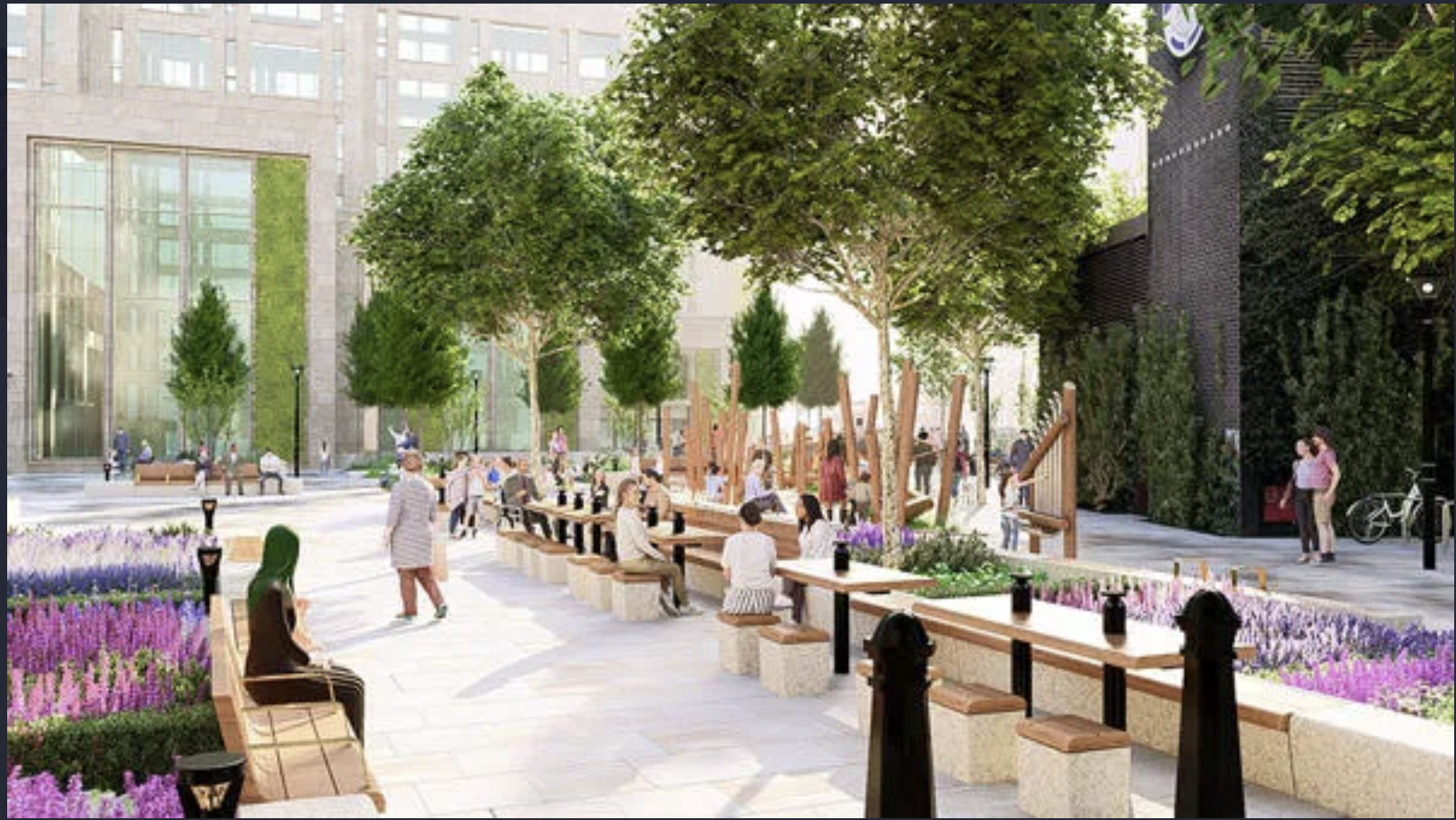
The City of London Corporation are working to transform the St Paul's gyratory to create a new public space, introduce safer walking and cycling routes, whilst retaining access for buses and motor-vehicles. The onsite works commenced on 28 April 2025 for around two years.
For full details of these developments, please go to the City of London Website: Link
Holy Sepulchre continues to explore the additional signage to help all to know the historical significance of the burials site as well as options to enhance the space. Do get in touch with the Fr Nick, Rector to discuss further nick@hsl.church.